
What Lens Should I Use for Pet Photography? The Question I Get Asked more than any other.
If I had a dollar for every time someone asked me,
“Belinda… what lens should I use for pet photography?”
I’d probably be writing this from my non - imaginary French Villa right now. 😄
It’s hands down the most common question I get and the truth is, there’s no single “perfect” lens. The right lens depends on the look you want, the space you’re shooting in, and how you want your subject to feel in the final image.
So instead of just telling you… I decided to show you.
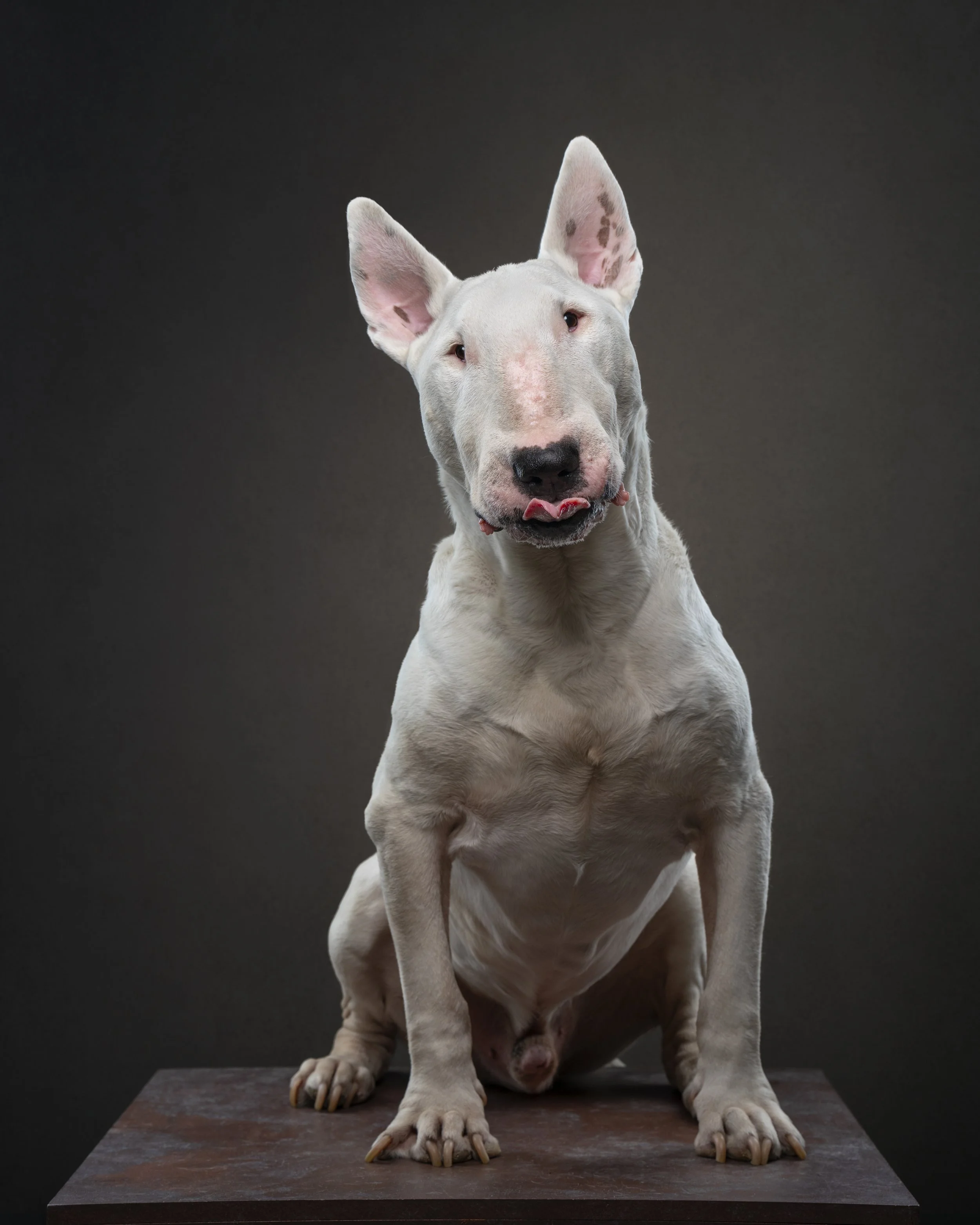
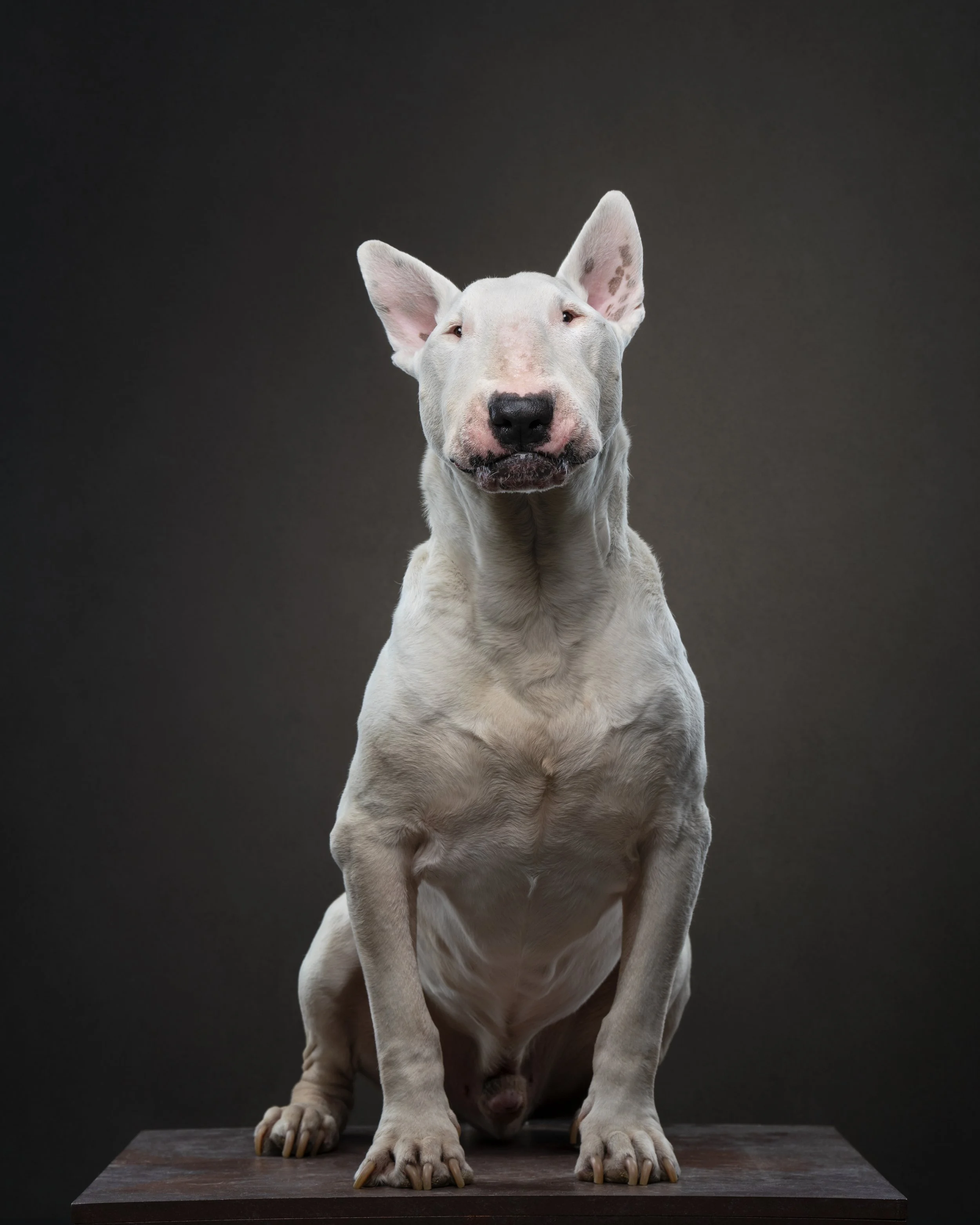
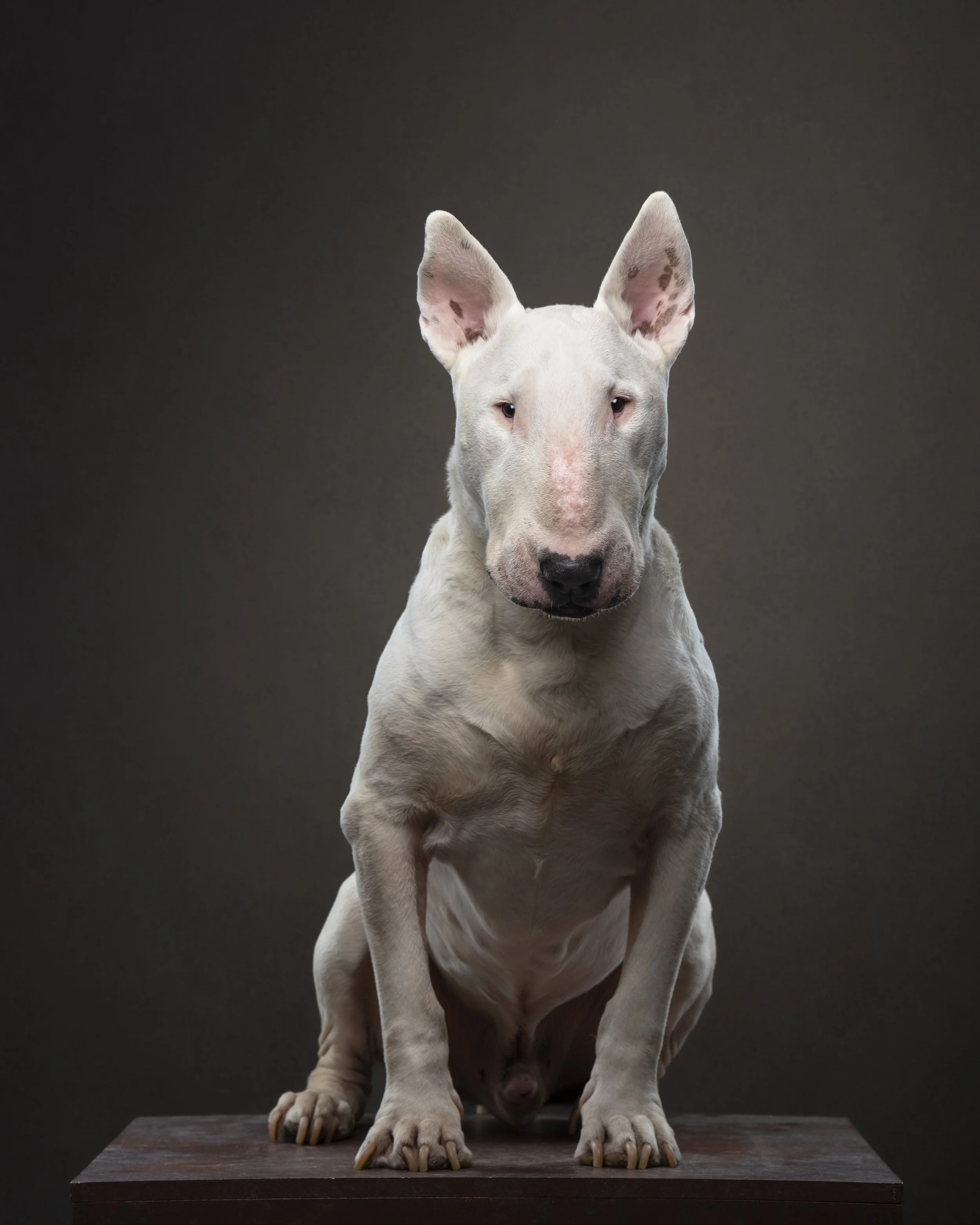
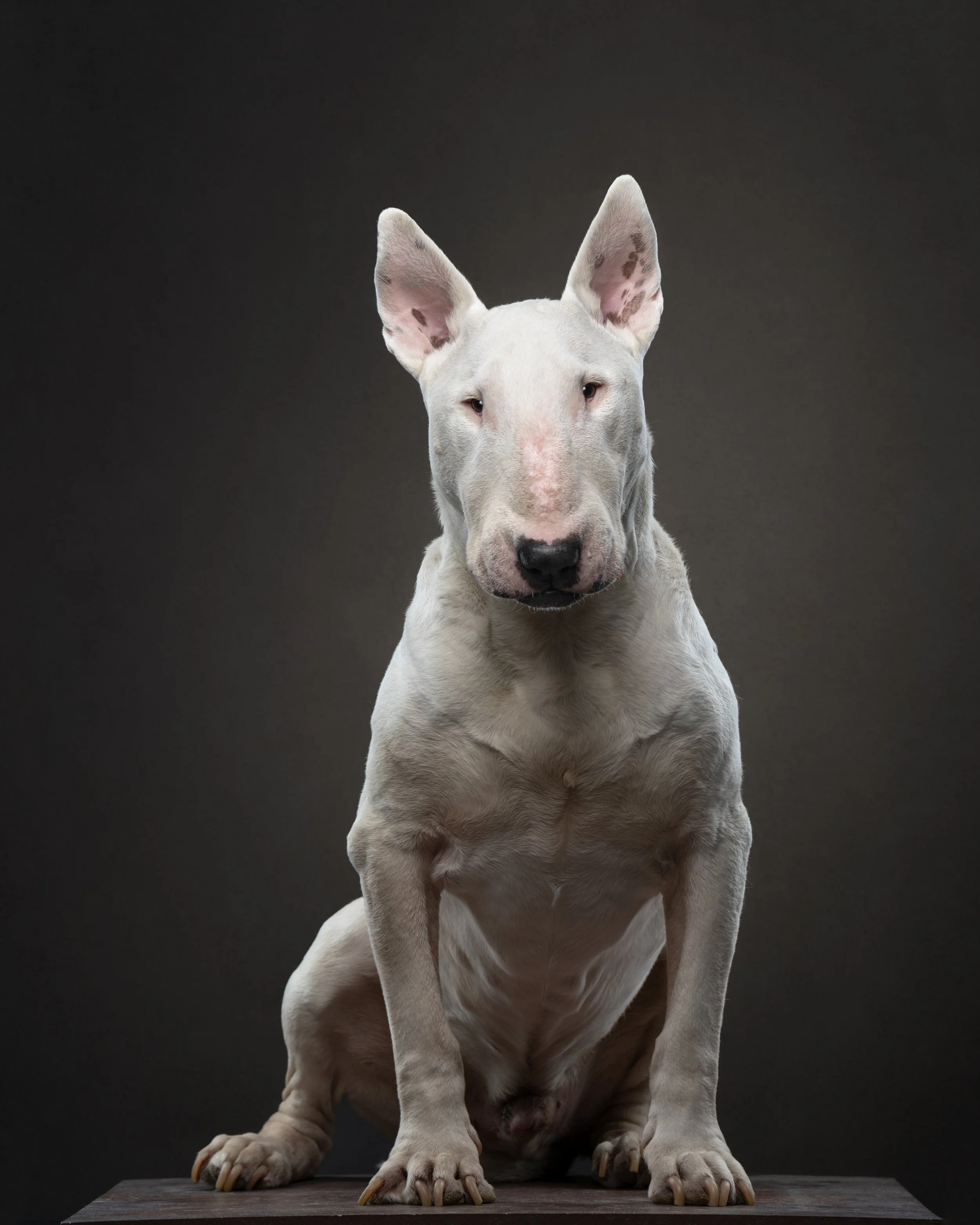
Meet my very patient boy, Astro, who helped me create a real world comparison using different focal lengths, from wide angle right through to telephoto. Same dog. Same setup. Same lighting. Different lenses. Very different results.
And this is exactly why lens choice matters.
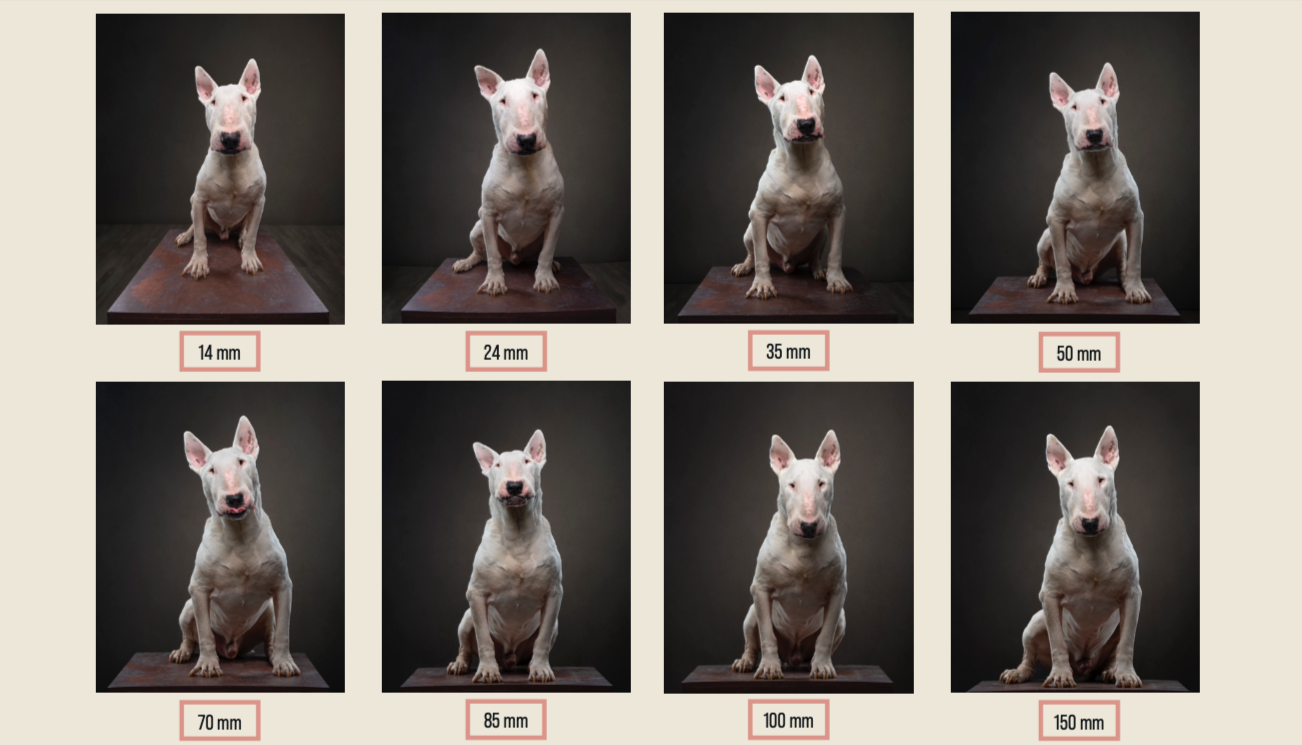
Astro photographed with different lenses showing focal length comparison
Your Lens Isn’t Just Gear — It’s a Storytelling Tool
Your lens choice affects:
How powerful or soft your subject appears
How flattering the face and body look
How much environment is included
How “luxury” your final image feels
And ultimately… how sellable your portraits are
A small change in focal length can turn:
A playful image into a powerful one
A casual shot into a wall-art piece
A “nice photo” into a “how much is that?” moment
Let’s break it down in simple terms.
Wide Lenses (Around 14mm–24mm)
These lenses exaggerate perspective. When you get close to your subject, the nose feels bigger, the head feels larger, and the body tapers away quickly.
Great for:
Dramatic, quirky, goofy portraits
Environmental pet portraits
Energetic, playful images
Watch out for:
Distortion (especially on noses and paws)
Making dogs look front-heavy or “cartoonish”
Wide lenses are fun but they’re not usually what I reach for in a luxury studio portrait unless I want that exaggerated look. Think Christian Vieler or Kaylee Greer who famously use the widest of the wide lenses.

14mm
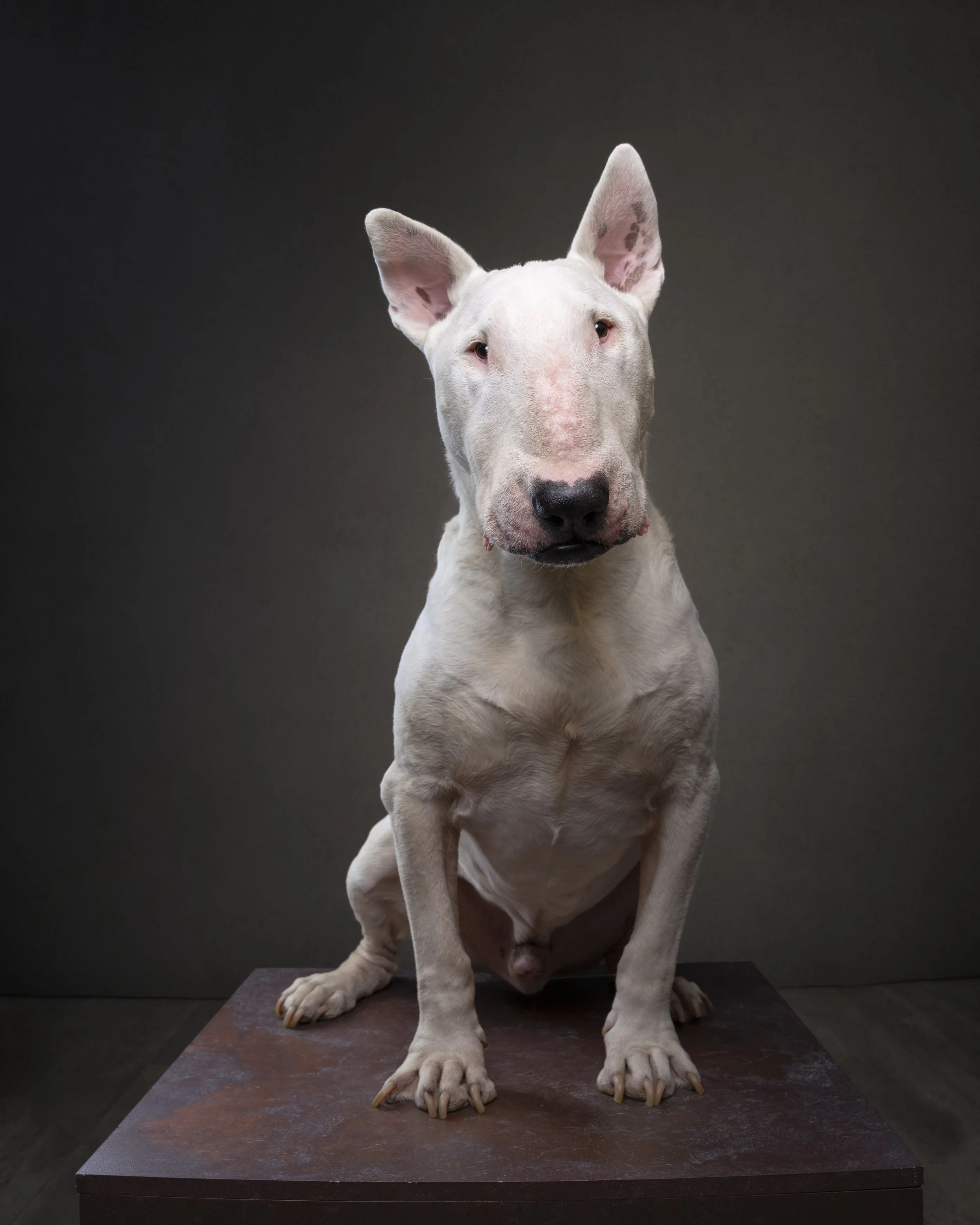
24mm
Mid-Range Lenses (35mm–50mm)
This is where things start to feel more natural. These lenses still show a sense of space but without the heavy distortion.
Great for:
Full-body portraits
Dogs with long bodies
Scenes where you want some background included
Lifestyle studio setups
Watch out for:
Can sometimes be a bit bland
This focal range gives a nice balance between realism and environment.
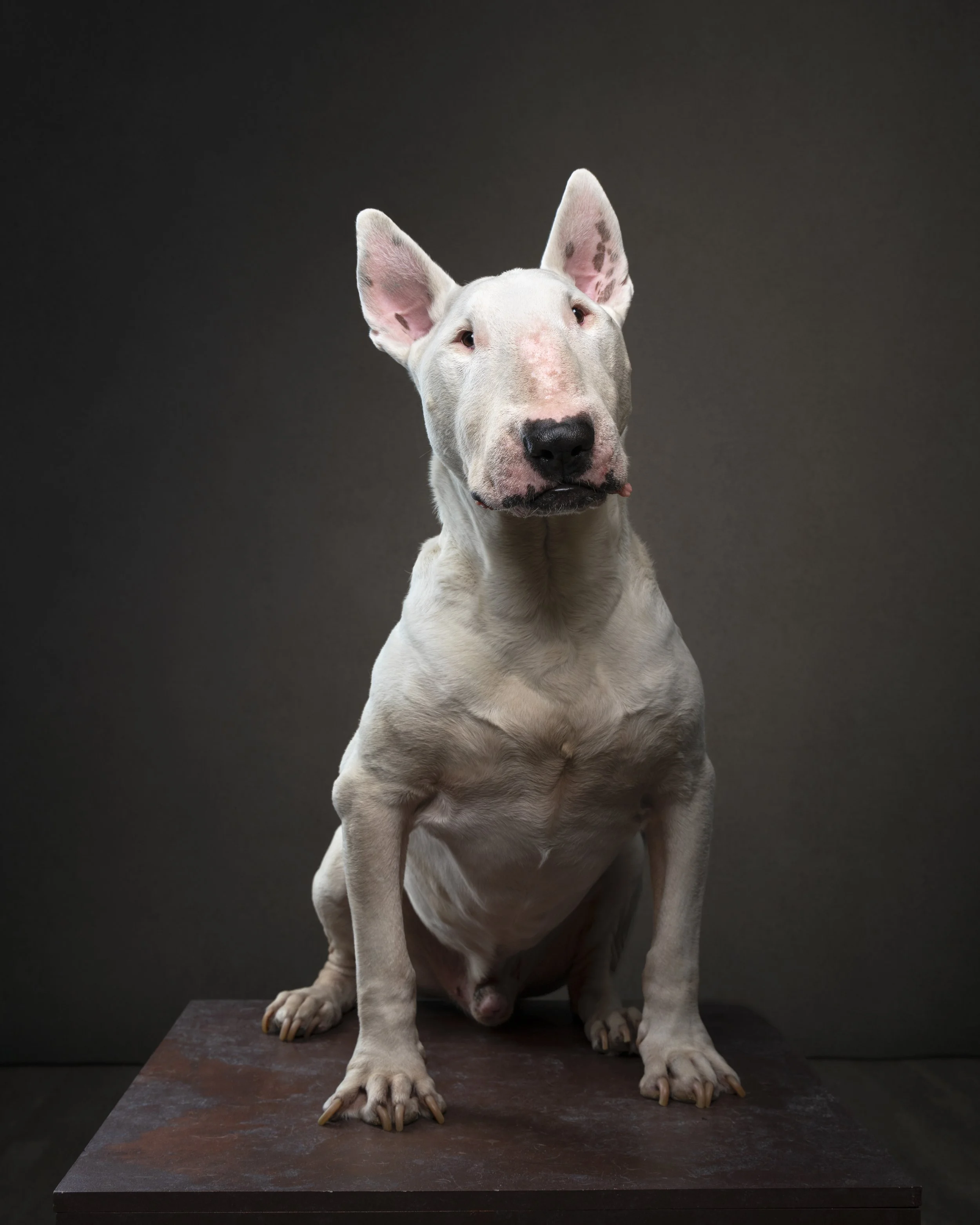
35mm
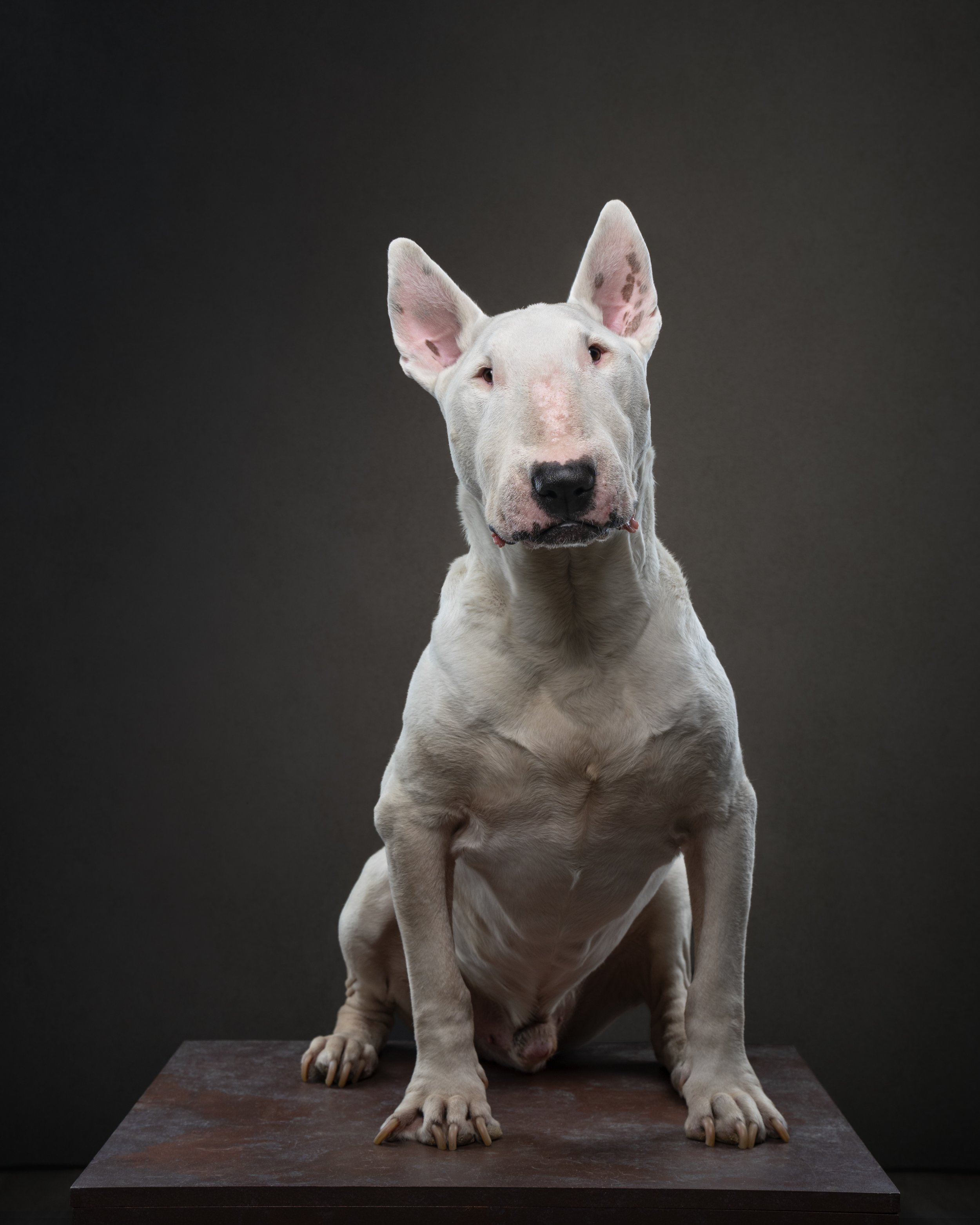
50mm
Classic Portrait Lenses (70mm–100mm)
Now we’re talking about my sweet spot for studio pet photography.
Great for:
Beautiful facial compression
Flattering proportions
Soft background separation
A strong, confident look in your subjects
Watch out for:
Not having the amount of studio space required for longer lenses
Not being close to the subject. A handler will be required here
If you ever wonder why some pet portraits look instantly “high-end” this focal range is often the reason.
70mm
85mm
100mm
Telephoto Lenses (135mm–150mm+)
These lenses compress everything even more. The dog feels powerful, calm, and beautifully refined in the frame.
Great for:
Tight headshots
Emotional expressions
Ultra-clean, luxury-style portraits
Watch out forr:
You’ll need more physical space to shoot
You will need an animal handler
These lenses really isolate your subject, not ideal if you want environment included
This is where magic happens for soulful, renaissance style portraits.
150mm
So… What Lens Should YOU Use?
Here’s the honest answer, consider what you are going for:
If you shoot environmental or playful work → 24–50mm
If you shoot studio portraits and wall art → 70–135mm is absolute gold
If you want tight, emotional, luxury headshots → 100mm+
And remember, you don’t need every lens. One well chosen focal length that suits your shooting style is far more powerful than a whole bag of gear you’re unsure how to use. I personally use a 35mm lens and have done since 2017 for all my studio work. This suits my studio size, the look I am after and keeps all of my shoots and images consistent.
Why I Teach This in My poses, pixels, paws & profit Workshops
Lens choice doesn’t just affect how your images look — it affects:
How confident you feel shooting
How quickly you can work
How flattering your subjects appear
The mood you want to convey
The style you can acheive
How “sellable” your final images become
This is something I teach in full detail inside my workshops, because once you truly understand how different focal lengths work, your photography levels up fast.
Astro’s lens test is the perfect example. Same dog. Same lighting. Totally different emotional impact, purely because of lens choice.
Final Thought
Next time you’re choosing a lens, don’t ask:
“What is everyone else using?”
Ask instead:
“How do I want this image to feel to the viewer? What kind of story am I trying to tell?”
Strong? Soft? Regal? Playful? Powerful? Tiny? Heroic?
Your lens choice is a storytelling instrument, not just a tool of the trade.

